First of all, here are the types of polar patterns that mics have.

AKG C451B

 |
| C451 frequency response |
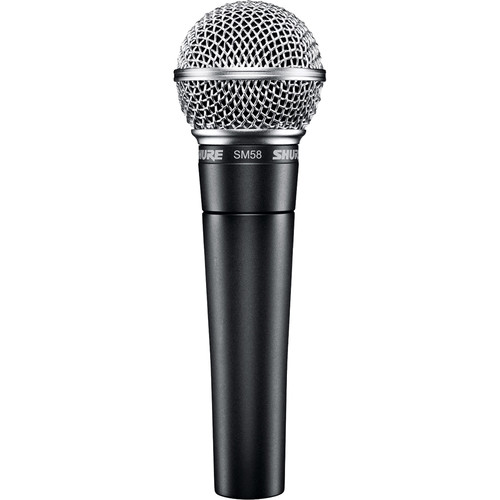
Shure SM58
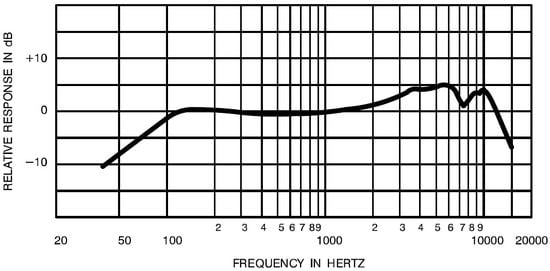 |
| Shure SM58 frequency response |

This is another dynamic microphone by Shure. It has a cardioid polar pattern and a frequency bandwidth of 40-15000 Hz. It isn't known for vocals but rather on instruments because the sound it produces is quite favoured.
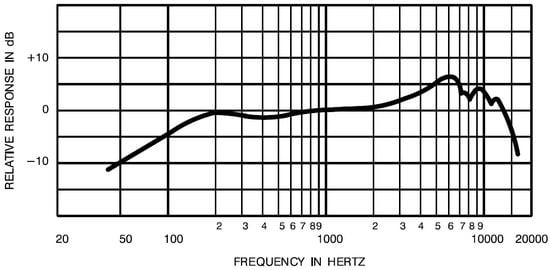 |
| SM57 frequency response |
Sennheiser MD421

This dynamic microphone features a unique bass roll off switch. There are 5 positions with both extremes labeled 'M' and "S'. 'M'' being music with the least bass roll off while 'S' means speech which has the most bass roll off. There are 3 more options in between these two options to adjust a more specific level of bass roll off. This microphone has a frequency bandwidth of 30-17000 Hz and a cardioid polar pattern.
 |
| Sennheiser MD421 frequency response |
Audio Technica AT2050

This is a large diaphragm condenser microphone which has a frequency range of 20-20000 Hz. Unlike other microphones, this does not have a fixed polar pattern. It is interchangeable between omnidirectional, figure-8 and cardioid. It has a 10dB pad which can be used in case the signal input is too high.
 |
| Audio Technica AT2050 frequency response
Neumann TLM 103

The Neumann TLM 103 is also a large diaphragm microphone and shares the same frequency range as the AT2050, 20-20000 Hz. It has a cardioid polar pattern. It is quite versatile and is used for vocals and instruments too.

Neumann TLM 103 frequency response
|


No comments:
Post a Comment